| www.laurahird.com |
| THE NEW REVIEW |
|
Review on the Independent website


|
 |
|
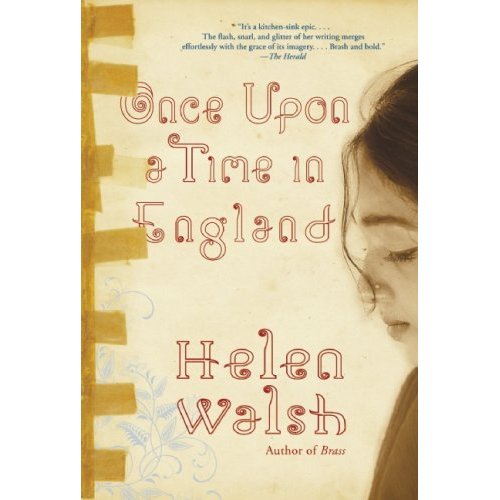
It is incredible that such a thought provoking book as �Once Upon a Time in England� comes from the writer of the in your face novel I�ve heard of but never want to read, �Brass�. Robbie Fitzgerald bursts onto the first pages of �Once Upon a Time in England� with red hair flying and telling us he is running for his life. Ahead of him lies is a life of regret, missed chances and bitterness. As his pregnant, Malaysian wife Susheela sits at home with their son Vincent, waiting for her man, Robbie tries to shape their future by seizing a chance to become a big time club singer. But the horrific scene played out in his absence shatters any chances of success for this small family. Susheela is rushed into hospital for a premature delivery of baby Ellie and that same night Robbie realises, with his wife�s fear of being alone, that his dreams will remain unfulfilled. In an attempt to distance his wife from her nightmares, Robbie settles for a factory job and moves his family to a boxy estate where, at Robbie�s insistence, Susheela sets about Anglosizing herself and burying her Malaysian roots. He banishes spices and begins to call her Sheila. While she is culturally suppressed, he is professionally and personally aggrieved and the gulf between the two young parents widens. Meanwhile their young son is being mercilessly bullied at school while his younger sister appears to deflect any such punishment. As each of the four main characters keep their feelings and their problems locked in English repression Walsh succeeds in building a picture of desperate hopelessness that has the reader frustrated for the family. The reader is expertly dragged along in every step of this breakdown and like an extended family we are mere bystanders who sit on our hands and watch the disintegration. The turning point of the novel is when son Vincent writes an honest portrayal of his family�s plight and this prize winning story is printed in the local paper. The Fitzgeralds are yanked from their delusions and forced to act. Robbie leaves his family to recapture his stage dream and Sheila returns to nursing to care for her children. Although Sheila tries to give her children all they need, her new middle class conditioning allows her to revert back to her state of avoidance of any unpleasant intrusion into her life. As the children grow into teenagers they both turn to drugs and deceit in the belief that this is a great life they are leading and it is only when tragedy strikes the family yet again that they all confront the lies they have been living. This resonant novel covers a number of different issues. On the top layer it is about England�s attitude towards migration in the late 1970s through the 1980s. But it also examines values and aspirations. It is about crippled industries in the Midlands, attitudes towards gays and the wide spread use of recreational drugs, which became fashionable in that era. It is about a dysfunctional family trying to cope. As someone who lived in a mining village during the demise of the mines I found Walsh�s portrayal of Robbie�s wallowing resentment of missed opportunities depressingly accurate. My frustration at Sheila�s passiveness and failure to see her family�s plight matched genuine emotions I have experienced in similar circumstances and the callowness of her children brought me ashamedly back to my own youth. I was totally caught up in their plight. Walsh�s build up of tension is expertly done, particularly in the opening chapters, but this is spoiled by the uneven language. At times sparks of originality and elegance peter into tedious description. I often found myself back in creative writing class mode where clich� avoidance and the use of interesting verbs become more important than telling the story. Some of the descriptions of the city skies are evocative, but could stray into over-kill and for some reason the author uses the word vault/vaulting as if it is her signature. I found the plot and structure easy to read and ran with the characters through the 360 pages. After reading �Once Upon a Time in England� I was tempted to read her first novel but having just reread a review of �Brass� I have decided to hold out for number three. Reproduced with permission
|
| ONCE UPON A TIME IN ENGLAND Helen Walsh (Canongate Books 2008) Reviewed by Moira McPartlin |
| If you would be interested in reviewing films/books for the site, contact me here |
| Book Review |
|
About Me Artists Best Tunes Books & Stuff Competition Contact Me Diary Events FAQ's Film Profiles Film Reviews Frank's Page Genre Bending Hand Picked Lit Links Heroes Index Links Lit Mag Central The New Review New Stuff Projects Publications Punk @ laurahird.com Recipes Samples Sarah�s Ancestors Save Our Short Story Site Map Showcase RELATED ITEMS Order Walsh�s �Brass�
Order Hanif Kureishi�s �Something to Tell You�
Order Miranda July�s �No One Belongs Here More Than You�
Order Gwendoline Riley�s �Joshua Spassky�
|