| www.laurahird.com |
| THE NEW REVIEW |
|
Review on the Tampa Bay website
|
 |
|
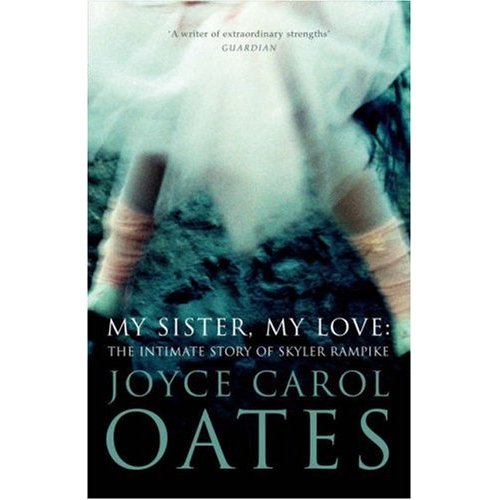
Joyce Carol Oates�s new novel is a strange one. Although Oates has never been much troubled by considerations of conventional good taste or political correctness, �My Sister, My Love� seems particularly disconcerting, as it is a black comedy inspired by a notorious � and unsolved - American murder case, that of six-year-old skating prodigy JonBenet Ramsay. Of course names are changed � the murder victim is now Bliss (n�e Edna Louise) Rampike. Yet the potential for disaster looms large: how can someone write a comic novel about a particularly distressing recent crime? Yet somehow Oates manages it. The novel is presented as an account by Bliss�s older, neglected, brother Skyler, written ten years after the fact. Oates uses a mixture of techniques: narratorial digressions, footnotes, deliberately �missing� material. An account of the relationship between Skyler and Heidi, another damaged celebrity offspring, is presented as a very much �written� story within the story. Oates�s targets are clear: the lure of celebrity and its price, and the feeding frenzy of modern fame culture. In this, �My Sister, My Love� is of a piece with Oates�s earlier work, even if it unusually shaped. In particular it recalls her reimagining of Marilyn Monroe�s life �Blonde� in that fame�s price is exacted on a female body. Poor young Bliss is prodded and poked, suffers injections that make her unable to sit down comfortably, is encased in a tight costume with more than a frisson of pre-pubescent sexiness (not for nothing does Oates mention more than once �a peek of white panties� as Bliss skates). Behind all this is the monstrous figure of Bliss�s mother, who drove both her children to become the champion skater she could not herself be, and neglects Skyler when he fails to live up to the task � and continues a career in the media after Bliss�s death. In a final twist, the wages of fame exact a price on her as well, as her macho husband looks on helplessly. In its black comedy, and by being filtered through the son�s narrative voice, this novel also recalls a very early Oates novel, �Expensive People.� Oates is not everyone�s idea of a humorous writer, and she can be heavy-handed for every time she hits her target. But this is not a cold-hearted novel: Oates does have compassion for her damaged, often deluded cast of characters. She also leaves us with some hope of healing, in a final scene that�s a little obvious but still effective. �My Sister, My Love� shows that Oates, at the age of seventy, is still firing on all cylinders: while the favourite themes are present, she has yet to repeat or parody herself. Reproduced with permission

|
| MY SISTER, MY LOVE: The Intimate Story of Skyler Rampike Joyce Carol Oates (Fourth Estate 2008) Reviewed by Gary Couzens |
| If you would be interested in reviewing films/books for the site, contact me here |
| Book Review |
|
About Me Artists Best Tunes Books & Stuff Competition Contact Me Diary Events FAQ's Film Profiles Film Reviews Frank's Page Genre Bending Hand Picked Lit Links Heroes Index Links Lit Mag Central The New Review New Stuff Projects Publications Punk @ laurahird.com Recipes Samples Sarah�s Ancestors Save Our Short Story Site Map Showcase RELATED ITEMS Order Oates� �Black Girl White Girl�
Order Oates� �Mother, Missing�
Order Oates� �Mother, Missing�

|