| www.laurahird.com |
| THE NEW REVIEW |
|
Review on the Observer website


|
 |
|
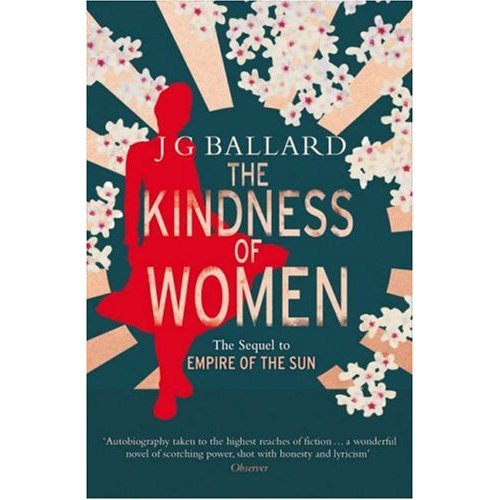
The first thing you notice is how short it is. People who have led shorter, less eventful lives have produced autobiographies far fatter than the 278 pages of �Miracles of Life�. There may be reasons for this. Ballard has already drawn on his own life for two novels: in third person in the Booker-nominated, best-selling and filmed �Empire of the Sun� and its first-person semi-sequel �The Kindness of Women�. Ballard has always been a concise writer: he�s produced short fiction prolifically and several of his shorter novels would have been novellas if there had been a ready market for them. (For however �literary� and �experimental� Ballard can be, he�s always been aware of the need to engage the reader. Some literary novelists, the late B.S. Johnson in particular, are given stick for disdaining this.) Even �Empire of the Sun� is only around 100,000 words, which is nowadays at the low end of adult novels� lengths. Maybe this book is shorter than other autobiographies simply because it has a better writer writing it. Wartime Shanghai and post-war Britain are vividly evoked in prose that is spare and which doesn�t draw undue attention to itself. Then again, �Miracles of Life� was written against a deadline, spurred on by a diagnosis of advanced prostate cancer. Fortunately, Ballard has lived to see its publication and is as of this writing (May 2008) still alive. The key is in the title. While the two earlier novels looked at Ballard�s life from particular angles, his autobiography is a partial one, exploring a theme through the life rather than trying to capture the whole of it. And those �miracles of life� are Ballard�s three children, which he brought up single-handed after the sudden death of his wife. So, childhood is the theme: Ballard�s own � which takes up nearly half the book � and Ballard as the parent and full-time writer. Especially in the Sixties, he witnessed many of the cultural changes but was on the periphery, always having to leave parties to go home and relieve the babysitter. In between whiles, we hear about the writing of certain key novels (his �first� novel �The Drowned World� - he does mention the real, disowned first, �The Wind from Nowhere - The Atrocity Exhibition� and �Crash� as well as the two autobiographical ones). We also have an excursion into the film industry with his writing credit on �When Dinosaurs Ruled the Earth� and especially David Cronenberg�s controversial film of �Crash.� Half of this book takes Ballard up to the age of fifteen: his childhood in the expat community in Shanghai and his internment with his family in Lunghua Camp. No doubt these experiences shaped Ballard�s subsequent life; they certainly shape this autobiography. These are the originals of the events fictionalised in �Empire of the Sun� and (to a lesser extent) �The Kindness of Women�, such as the killing of a young Chinese man by Japanese soldiers at a railway station, a scene which recurs in �Kindness�. As with the novels, here are the originals of the imagery that has haunted Ballard�s fiction ever since: the crashed airplanes, the drained swimming pools. (Another inmate was a young man by the name of Cyril Goldbert, later to find fame as an actor called Peter Wyngarde.) And at the end of the book, Ballard returns to Shanghai as part of a BBC documentary. He attains closure by the experience, and a brief postscript apart, that is the end of the book. So �Miracles of Life� is a themed memoir, not necessarily a full autobiography. That may be a task for another writer, after Ballard�s death. Reproduced with permission
|
| MIRACLES OF LIFE: Shanghai to Shepperton: An Autobiography J.G. Ballard (Fourth Estate 2008) Reviewed by Gary Couzens |
| If you would be interested in reviewing films/books for the site, contact me here |
| Book Review |
|
About Me Artists Best Tunes Books & Stuff Competition Contact Me Diary Events FAQ's Film Profiles Film Reviews Frank's Page Genre Bending Hand Picked Lit Links Heroes Index Links Lit Mag Central The New Review New Stuff Projects Publications Punk @ laurahird.com Recipes Samples Sarah�s Ancestors Save Our Short Story Site Map Showcase RELATED ITEMS Order Ballard�s �The Atrocity Exhibition� on dvd
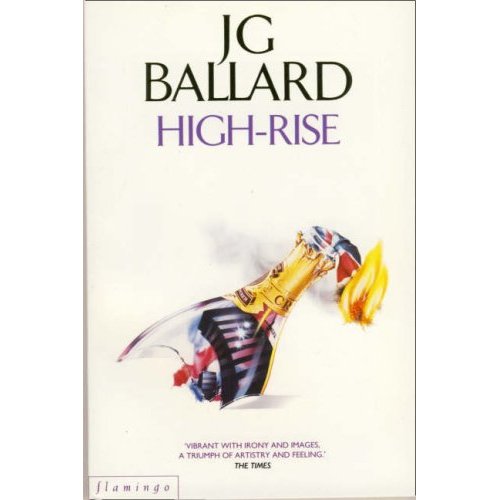
Order Ballard�s �High-Rise�
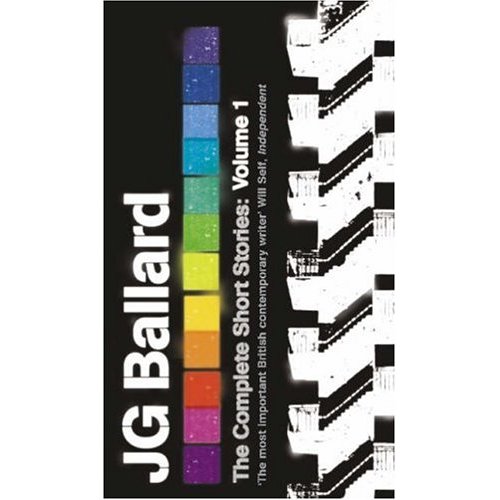
Order Ballard�s �The Complete Short Stories�
Order Ballard�s �The Kindness of Women�
|