| www.laurahird.com |
| THE NEW REVIEW |
|
Read Stella Duffy�s story from the book on the Guardian website


|
 |
|
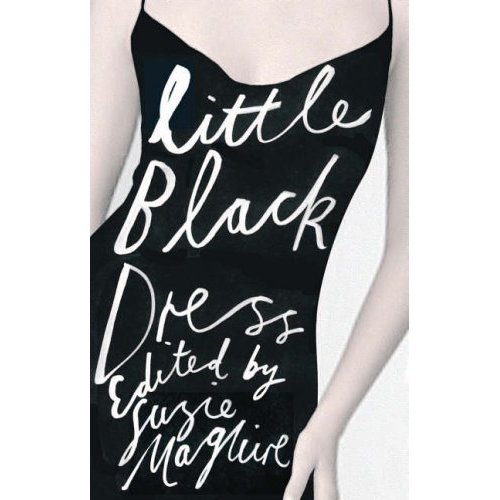
Although this anthology was first published in 2006, like every classic little black dress it will never go out of fashion. Susie Maguire has compiled a catwalk of talent from different points of the compass; from Shetland to Chicago, Calcutta to Nairobi. These global viragoes unite in a celebration of women�s literature and the veneration of a fashion icon. It would be usual in an anthology of sixteen different stories to find one rip in the seam, but Maguire has chosen well, each story is executed with style and verve. To review every story in this anthology would be too cumbersome, so I have riffled through the rack and pulled out the highlights. �Being the Baroness� by Stella Duffy is a complex story told in the first person about a woman who recounts her life choices, her loves and regrets. She has an exact idea of the stages of womenhood; her own version. At first I found the prose difficult to read but once I tuned into it I discovered a poetic and intriguing style. Philosophies like the theory that in death we will be alone, quiet, single �and all the gold rings in the world will not save us from that� resonated with me long after I turned to the next story. In �The Girl Before�, Morag Joss tells the disturbing story of a fifteen year old foreign girl held in a room until her papers are cleared. She is aware of the lingering presence of the girl who occupied the room before her; the left behind things, tea, coffee, makeup and a little black dress. The new girl becomes desperate in her prison and plans her own suicide but another small find from the girl before gives the heroine hope and courage. The understated tone allows the reader to pick up on what is happening even though they are never told. Susie Maguire not only edits this collection, she contributes two of her own stories. In �Alma Martyr� she describes a girl�s reunion - Midge in her little black number meets her four old school friends, of 30 years earlier, for an expensive lunch in Harvey Nicks. She tells them of her privileged life as wife of a film producer. The other four are frumpy middle aged and should be jealous but she is so generous and nice they are drawn in by her charm. The satisfying ending is of table turning revenge. I remember Jean Marsh as Rose in the TV series �Upstairs Downstairs� and although I know she is one of the creators of the show I associate her more with acting than writing. Now, after reading �Any Mother�s Child�, her contribution to this book, I am in awe of her writing talent. This is an intriguing and captivating tale from a young girl�s point of view. Images and snatches of conversation cleverly spell out a picture like a puzzle. The story centres round her family; her brother, their father and his new girlfriend, but it is through Mrs B, the woman who does, that the author allows the reader to work out what is happening. Her sayings fill the gaps in the story. �What to Wear in the Absence of Light� by Hannah Gill is the story of Camille. Forced back to her family home to recuperate from a failed suicide attempt she reconnects with her much younger sister Janet. A shared childhood doll helps both girls realise the truth of their lives and teaches them how to trust. The writing is exquisite, the descriptions of the home are sickeningly vivid and the mother�s character instantly recognisable. No female collection would be complete without a tale of men behaving badly. In �Far More Fair than Black� by Candia McWilliam we look in on the lives of two couples; Otto and Mona, Milly and James. Each has their own thoughts while they dine in a pavement caf� in Venice. The bonds and strains of long term relationships are played out with accuracy as each accepts his or her role. When James steps outside his role the others rally to mend the broken bond and return the group back to the norm. A splendid observation on the games people play in everyday life. We stay in Europe for ghost story �Red Letter Day� by Kate Mosse. Mosse is famous for her medieval themes and this short story is no exception. A young woman drives her hire car through snow and blizzards to the high mountains in the Pyrenees in search of her salvation. She has a meal in a welcoming but deserted restaurant and climbs alone to a sacred pilgrimage site. There she meets her destiny. This story is both chilling and thought provoking. My favourite piece in the whole collection is �White Coat/Black Dress� by Manda Scott. This is a tender story about a student doctor who bedsits a brilliant physicist, brain damaged during a botched operation. The conversation takes place between the spoken word of the student and the eyes of the patient. The LBD of the story appears in a photo of the eminent physicist a few years earlier when she received a prestigious award. The student is persuaded by the eyes to assist in her death. The author has managed to produce a touching yet unsentimental account of an impossible conversation. �Little Black Dress� is a perfect example in the art of short story writing. Although the theme and writers have been picked to appeal to women, I believe all readers who enjoy a well executed short story will enjoy this book Reproduced with permission
|
| LITTLE BLACK DRESS ed. Susie Maguire (Birlinn 2007) Reviewed by Moira McPartlin |
| If you would be interested in reviewing films/books for the site, contact me here |
| Book Review |
|
About Me Artists Best Tunes Books & Stuff Competition Contact Me Diary Events FAQ's Film Profiles Film Reviews Frank's Page Genre Bending Hand Picked Lit Links Heroes Index Links Lit Mag Central The New Review New Stuff Projects Publications Punk @ laurahird.com Recipes Samples Sarah�s Ancestors Save Our Short Story Site Map Showcase RELATED ITEMS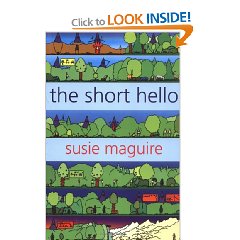 Order Susie Maguire�s �The Short Hello�
Order �Something Wicked, Something New: New Scottish Crime Writing� edited by Susie Maguire
Order �Hoots!: Anthology of Scottish Comic Writing� edited by Susie Maguire
Order Susie Maguire�s �Furthermore�
|