| www.laurahird.com |
| THE NEW REVIEW |
|
Blog website for the publisher


|
 |
|
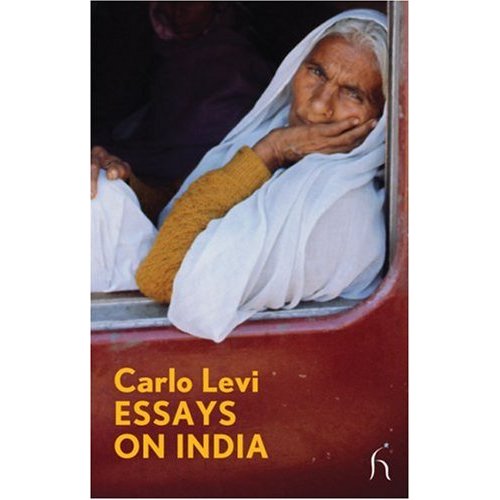
In 1957 the Turin newspaper La Stampa sent the writer, painter and anti-fascist Carlo Levi to India for a month. He was, and is, best known for his account of poverty in southern Italy, �Christ Stopped at Eboli�, which informed the world of the �problem of the south� and established Levi�s humanistic credentials for good. We are not told if he was given a brief for India, and if he was he does not appear to have kept to it: the �Essays on India� include pieces on Nehru, a political conference, New Delhi�s architecture, peasant villages, and the teeming mass of the urban population, which apparently never ceased to astonish and disturb him. Normally we expect telling detail from travel books, which penetrate the surface strangeness of the country and give us a taste of the culture, the history, the tensions that lie below. Levi rarely does this, possibly because he did not speak any of the languages of India, though he certainly made use of guides and was on friendly terms with other native speakers. The second essay, �The Dwarfs of the Maharajahs�, is as close to normal travel writing as we get, with people properly introduced, and some context and background provided to make sense of them and their situation, and very good it is too. But Levi mostly leaves undisturbed what other writers would dive into: his attention is taken by surface impressions and his imagination stimulated by what he sees, or thinks he sees; as he puts it, �completely anchored to his eyes, his senses, the images before him, the visible aspects of reality.� The results are mixed. The enthusiastic account of the poets� festival, in which he appreciates the performances and the response from the audience, but can�t understand the actual words, is superb; so is �The Rainbow Market�, in which he says it is impossible to give the reader an impression of the total variety and overwhelming spectacle in front of him - and then does so. Unfortunately, many of the later essays are as revealing as a scribbled comment on the back of a postcard: went here, saw that. They tell you enough to pique your curiosity and then fail to satisfy it. Levi was a European intellectual and writes like one, in long sentences full of subordinate clauses, with metaphor and allusion piled on, linked by endless commas or broken up by parentheses. This can be soothing, sweeping or deeply irritating, depending on how clear he makes his meaning. �Motionless time multiplies infinitely� (as one sentence begins) belongs with T.S. Eliot; on the other hand, his description of the old government quarter of New Delhi as �nothing other than an enormous hidey-hole; a hidey-hole that entirely conceals from the view of the occupying rulers any sight of the non-existent occupied populace� is deliciously ironic, worthy of Milan Kundera. One of his most affecting notions, even though he reworks it frequently, is that India is a country in which time itself has been made permeable. All periods, all states are simultaneously present, so that he feels he is travelling not only through India�s past, but that of the whole of humanity. The comparison with Basilicata, where he served his internal exile in the �30s, is striking. Time had stopped there as well, but at the cost of stopping everything else. Levi�s India is constantly in motion, and the effect is intoxicating. Whether old India hands, armchair or otherwise, will find anything new in here is moot, and as an introduction to Levi�s work and thought, �Essays on India� is thin fare. There is no reason for anyone not to go directly to the genuine masterwork of �Christ Stopped at Eboli�. But to allow these cavils to keep one from welcoming further translations of Levi�s work would be unwise. Levi had an unusual depth of vision in a spectrum not accessed by most writers, and if his reports of what he sees in it are sometimes, even frequently pseudish, gnomic or simply unmoving, when he hits his mark, he does so cleanly and gives the sense of an essential truth being revealed. For this reason we should be grateful to welcome him back whenever translation budgets and publishing schedules permit. Reproduced with permission
|
| ESSAYS ON INDIA Carlo Levi (Hesperus Press 2008) Reviewed by Graham Paterson |
| If you would be interested in reviewing films/books for the site, contact me here |
| Book Review |
|
About Me Artists Best Tunes Books & Stuff Competition Contact Me Diary Events FAQ's Film Profiles Film Reviews Frank's Page Genre Bending Hand Picked Lit Links Heroes Index Links Lit Mag Central The New Review New Stuff Projects Publications Punk @ laurahird.com Recipes Samples Sarah�s Ancestors Save Our Short Story Site Map Showcase RELATED ITEMS Order Levi�s �Christ Stopped at Eboli�
Order Levi�s �The Watch�
Order Levi�s �Fleeting Rome�
|